Malachai
Last ChristmasMalachai is a demonic military power defined by a sharp contradiction: its fighters wield terrifying force, yet the dark lords they serve deny them freedom outside wartime. Its soldiers are dangerous to humans and to the Sephirii, but the fate awaiting them after victory is captivity, capture, or enslavement. That contradiction shapes the organization’s place in the war and makes Caleb (Malphas)’s defection more than a change of battlefield allegiance: it is a break with a system that has long controlled him.
Identity and Military Structure
Malachai is described both as a line of demons and as an army. Its leader is Monakribos Malachai, while Caleb (Malphas) is a commander in the army the demons fight for. The distinction between command and subjection matters: Caleb’s rank gives him authority within the military force, but it does not release him from the power of the dark lords. The narrative presents the organization not as an independent community, but as a force whose members serve rulers capable of leashing their powers and restricting their freedom.
The demons’ threat is established in action rather than through a catalogue of abilities. During an attack, one Malachai demon sends fire through a room; later, an individual opponent uses a knife, claws, and flight against Caleb. Caleb responds with armor, and the demon recognizes the emblem it bears. These details show how a visible sign of rank or affiliation can identify a fighter in the chaos of battle, while the sequence of fire, close combat, and flight presents the danger posed by a Malachai opponent without implying that every demon uses every method.
Warfare and the Cost of Service
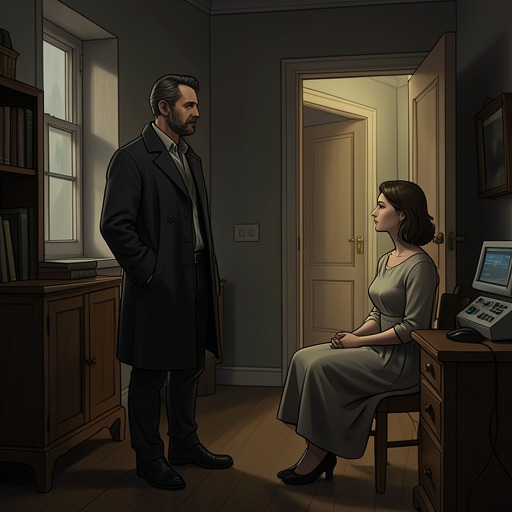
Malachai’s fighters are deadly enough that ordinary humans cannot be expected to fight them unaided. When a demon attacks, Caleb puts himself between it and Lilliana and her father. He dislikes displaying his powers before humans, whom he regards as superstitious, but judges that concealment would leave them unable to defend themselves. He draws the demon’s attention, fights it directly, and is wounded when its claws rake his back. In this encounter, the organization’s military force is a danger to civilians as well as to its enemies.
The deeper cost of service emerges when Caleb challenges a Malachai demon who recognizes him. The demon treats his alliance with the human side as disgraceful and expects a reward for its own loyalty. Caleb counters that service will not save it: after the war, the likely outcomes for the demons are death, capture, or enslavement, as has happened to them before. Their freedom is permitted only while war is being fought. This is not a promise of future equality within Malachai; it is a description of how the dark lords maintain control by making wartime usefulness the condition of temporary liberty.
The competing human powers offer no simple guarantee of safety, but Caleb believes the Kalosum might show the demons mercy if it wins. He contrasts that possibility with the Mavromino, which he expects would continue to abuse and subjugate them even in victory. His earlier determination to keep the war going had therefore been bound up with his fear of being leashed again: prolonged conflict meant prolonged freedom from the dark rulers. The organization’s political context is consequently not just a contest between armies. For its demon soldiers, the outcome also determines whether the end of war brings mercy or renewed domination.
Defection and Recognition
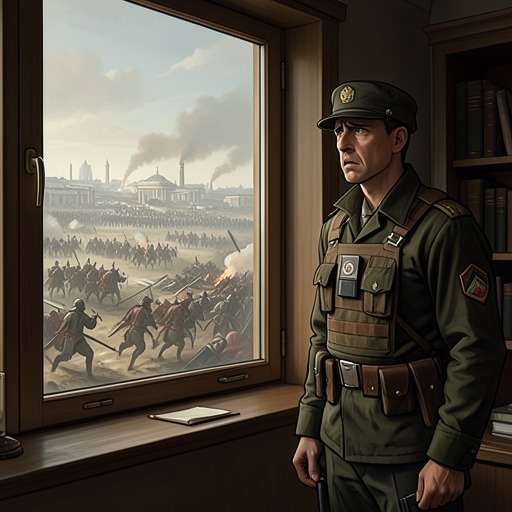
Caleb’s break with Malachai becomes unmistakable when he fights on the Kalosum side. His armor gives him away to a Malachai opponent, who recognizes the emblem and understands that the commander is fighting against the army to which he belongs. The encounter makes the change public and irreversible; Caleb realizes that he has exposed himself. His answer to the demon’s appeal to loyalty is rooted in the captives’ likely fate, not in a denial of his former identity.
The defection also places Caleb between forces that do not readily accept his change. When he enters the larger battle, the Sephirii attack him. Unwilling to harm them, he takes their blows while trying to reach his own demonic brethren. He later returns to the fighting with allies, and the demons are eventually routed. Itzal survives, leaving Caleb to anticipate that he will tell Azura about the defection. The news reaches Azura as a report that Malphas had fought with the Kalosum, and she reacts with fury. Noir interprets the sudden end to the fighting and the later appearance on the enemy’s side as evidence that someone has changed Malphas through love. That is Noir’s explanation, not a statement of Malachai’s formal doctrine, but it reveals how the defection is understood by those looking for its cause.
Narrative Significance
Malachai’s military power supplies the immediate threat in the room where Caleb protects Lilliana and her father, but its coercive order also gives his allegiance shift a broader meaning. He is not simply a feared demon choosing a different opponent: he is a commander rejecting service under rulers who reserve freedom for wartime and captivity for what follows. His decision makes a former insider’s knowledge of the system visible through conflict with a soldier who still expects loyalty to be rewarded.
The change is personal as well as political. After the battle, Caleb sees the dead among people he knew, people with whom he had laughed and celebrated the solstice and other holidays. He feels their loss rather than remaining numb to it, and recognizes that Lilliana has changed him. That new capacity to care does not make him safe from grief. When he later finds her dead, he gathers her body, weeps, and vows to bring ruin on everyone responsible. Malachai is not identified in that moment as the sole cause of her death, so the revenge vow cannot be assigned to the organization alone. Rather, the contrast clarifies the emotional stakes of Caleb’s transformation: the capacity for attachment that distinguishes him from his former indifference also makes loss unbearable. Malachai’s place in the story thus links military violence and enforced subjection with the personal cost of becoming someone who can care about the lives caught in war.